
Doctor at Home
When Should You Call a Doctor at Home? A Karachi Guide
When to call a doctor at home in Karachi: fever, infections, elderly or bedridden patients and after discharge. Plus red flags that need the ER instead.
Executive Summary
Knowing when to call a doctor at home saves time, stress and sometimes a hospital trip. Many problems need a proper examination but not an emergency room. A home visit fills that gap. It brings a qualified physician to the patient without the drive, the parking and the queue.
This guide shows the situations where a doctor visit at home in Karachi makes sense. It also lists the red flags that mean you should skip the home visit and go straight to a hospital.
Which Situations Call for a Doctor at Home?
A home visit is the right choice when the patient needs a doctor's assessment but travel is hard, risky or exhausting. These are the most common cases.
Fever, infections and flu
Fever is the top reason families call a home doctor. A patient with a high temperature, body aches or a chest infection often feels too weak to sit in a car. A doctor can examine them at home, check their oxygen level and decide whether they need antibiotics, tests or simply rest and fluids.
Call a doctor at home when fever:
- Lasts more than two or three days
- Comes with a bad cough, vomiting or loose motions
- Affects an elderly parent, a diabetic or a person with heart or kidney disease
- Keeps coming back after it settles
Our general physician visits cover fever, infections, stomach problems and breathing complaints.
Mobility problems and bedridden patients
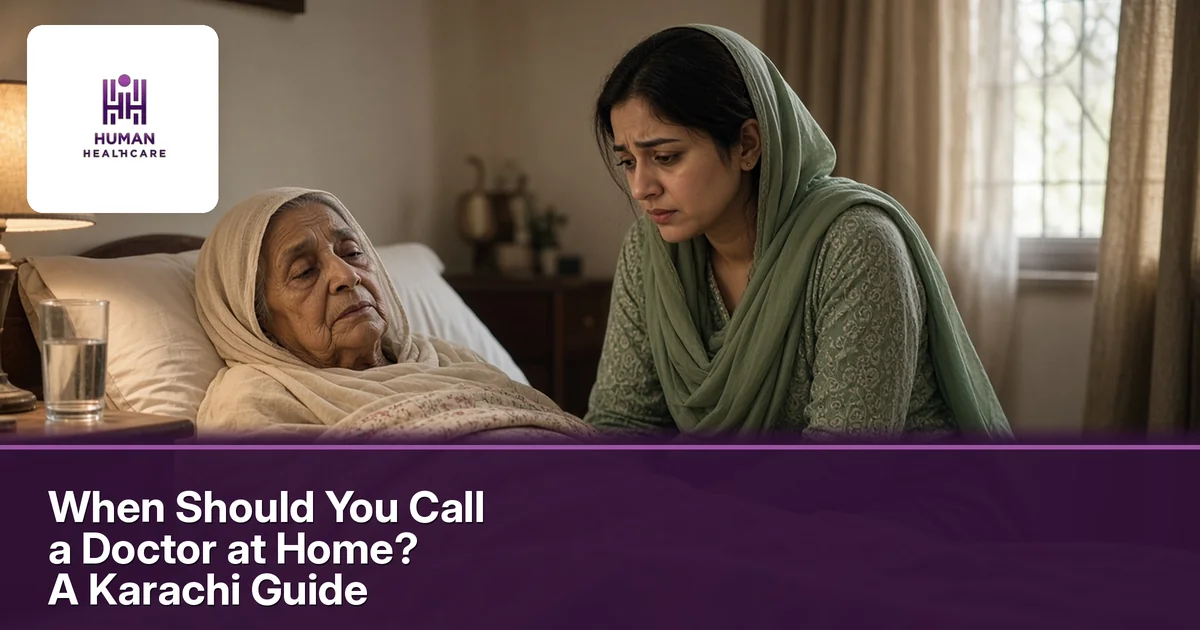
Some patients cannot leave the house without two people, a wheelchair and a lot of pain. Stroke survivors, patients with severe arthritis and bedridden patients fall into this group. For them, a clinic visit can do more harm than good. A home visit lets the doctor examine them where they are comfortable and safe.
Elderly parents who find travel hard
Older adults tire quickly. Long waits in crowded rooms raise their risk of picking up infections. Karachi traffic makes a simple check-up an all-day trip. A home visit removes these problems. It also lets the doctor see the home, the medicine box and the daily routine. Read more about how home visits support elderly patients.
After hospital discharge
The first days at home after a hospital stay are a sensitive time. Medicines change. Wounds need checking. New symptoms can appear. A follow-up visit at home helps catch problems early and keeps recovery on track.
Chronic condition check-ins
Diabetes, high blood pressure and heart disease need regular reviews. When readings change or new side effects appear, a home doctor can adjust the plan without a trip to the clinic.
Signs a family member should not ignore
Patients often play down their symptoms. Elderly parents in particular may say "I am fine" to avoid troubling their children. Family members should call a doctor at home when they notice:
- Eating or drinking much less than usual
- New confusion, drowsiness or unusual behaviour
- A fall, even if the patient says nothing hurts
- Missed or doubled doses of important medicines
- Swollen feet, breathlessness on small effort or a new cough
These changes can be early signs of infection, dehydration or a medicine problem. A prompt home visit often prevents a hospital admission.
Red Flags: When Should You Go to the ER Instead?
Go to the nearest hospital emergency department now if the patient has any of these signs. Do not wait for a home visit.
- Chest pain, pressure or tightness, especially with sweating or breathlessness
- Stroke signs: face drooping, arm weakness, slurred speech or sudden confusion
- Severe difficulty breathing or blue lips
- Heavy bleeding that does not stop with pressure
- Loss of consciousness, a fit or seizure
- A serious injury, such as a bad fall with a suspected fracture or head injury
- Sudden severe headache or severe abdominal pain
A doctor at home service provides urgent but non-emergency care. It is not an ambulance or emergency team. In any life-threatening situation, hospital care comes first.
Unsure if it is an emergency? If in doubt, go to the hospital. For non-emergency care, Book an appointment or call 0319-2060174.
When Is a Clinic or Telemedicine Call Enough?
Not every problem needs a doctor at the door. Use this simple guide.
| Situation | Best option |
|---|---|
| Mild cold, no fever, patient is active | Rest at home; clinic if it lasts |
| Repeat prescription for a stable condition | Clinic or your regular doctor |
| Fever with weakness in an elderly parent | Doctor at home |
| Bedridden patient with a new symptom | Doctor at home |
| Check-up after hospital discharge | Doctor at home |
| Need for an X-ray, CT or MRI | Hospital or diagnostic centre |
| Chest pain, stroke signs, severe breathlessness | Emergency department now |
A patient who is mobile, feels reasonably well and lives near a clinic may prefer to go in person. Our article on doctor at home vs a clinic visit compares both options in detail.
What Should You Tell the Coordinator When You Book?
A clear booking call helps the team send the right doctor. Have this ready:
- Patient details: name, age and gender
- Main symptoms: what started, when and how bad it is
- Existing conditions: diabetes, BP, heart, kidney or other long-term illness
- Current medicines: names and doses, or a photo of the packs
- Recent reports: lab results, scans and discharge summaries
- Address and access: area, landmark, floor and whether there is a lift
- Contact person: who will be at home during the visit
If you have a preference, such as a female doctor, mention it at this stage. The team will try to arrange it, subject to availability.
What If Your Family Has No Transport or the Carer Is at Work?
Many families delay care because getting to a clinic is hard. These are common problems in Karachi homes:
- No car or driver. Ride-hailing with a frail patient is difficult and risky.
- Traffic. A short distance can take an hour at peak times.
- The main carer works. A son or daughter cannot take a full day off.
- Family abroad. Children in the Gulf, UK or US cannot be there in person.
- Two patients at home. Leaving one parent to take the other is not an option.
A home visit removes the trip completely. The doctor comes to the patient. Families abroad can join by phone and later see the visit summary, prescriptions and reports on the Family Health Dashboard.
To understand how the full service works, read what a doctor at home service is and how it works. For fees, see how much a doctor home visit costs in Karachi.
Frequently Asked Questions
When should I call a doctor to my home?
Call a doctor to your home when the patient needs an examination but travel is hard or risky. Common reasons include fever with weakness, infections, a bedridden or elderly patient with new symptoms, a check after hospital discharge, or a change in diabetes or blood pressure readings. Emergencies always go to hospital.
Is fever a reason for a home visit?
Yes. Fever is one of the most common reasons for a home visit. Call a doctor if fever lasts more than two or three days, keeps returning, or comes with cough, vomiting or loose motions. Act sooner for elderly patients, diabetics and anyone with heart, lung or kidney disease.
What symptoms need the emergency room instead?
Go to the emergency room for chest pain, stroke signs such as face drooping or slurred speech, severe breathing difficulty, heavy bleeding, fits, loss of consciousness, a serious injury or a sudden severe headache. A home visit is for non-emergency care and should never delay emergency treatment.
Can I call a doctor at night in Karachi?
You can contact the care team by phone or through the online form to ask about a visit. Night and late visits depend on the patient's location and doctor availability. If the patient's symptoms are severe or getting worse quickly at night, go to the nearest hospital emergency department.
Call a Doctor at Home When It Counts
A home visit is the right call for fever, infections, frail or bedridden patients, recovery after discharge and chronic condition reviews. It is the wrong call for emergencies. Keep the red-flag list on your fridge, and act fast when you see one.
For non-emergency care, Book an appointment today. Call 0319-2060174.
2 more tagsShow fewer tags
- Medical Care at Home
- Fever