
Doctor at Home
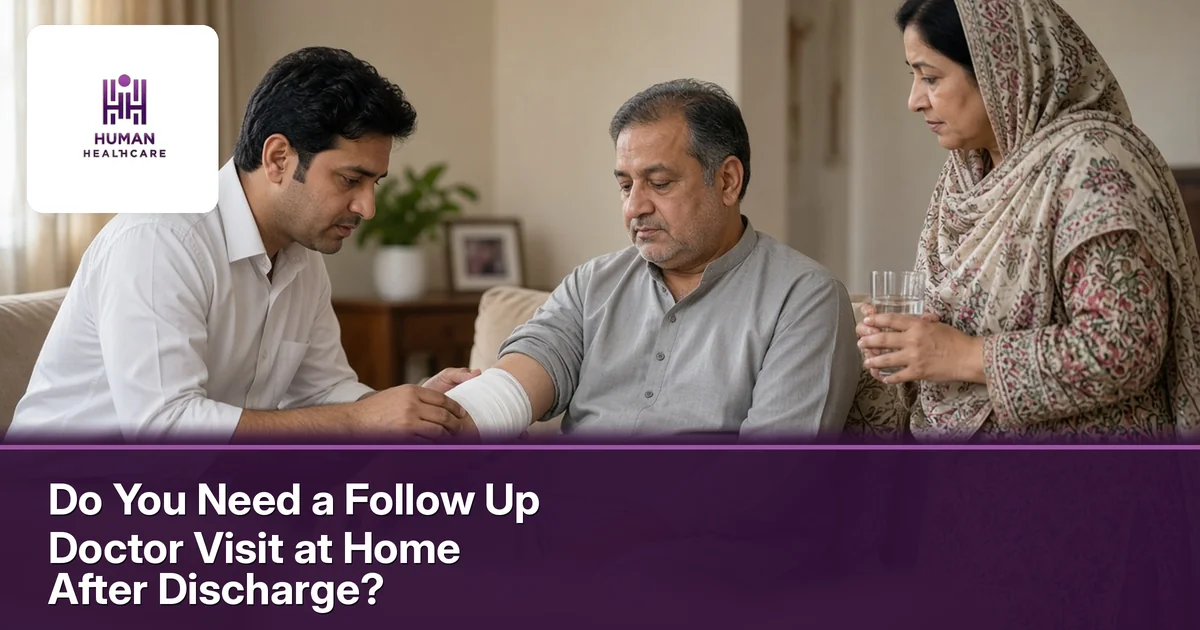
Do You Need a Follow Up Doctor Visit at Home After Discharge?
Why a follow up doctor visit at home matters after hospital discharge: what the doctor checks, how it links with nursing and the warning signs to watch for.
Executive Summary
Going home from hospital feels like the finish line. In reality, it is the start of a new phase. Medicines change, wounds are still healing and energy is low. Problems that appear in the first days at home are a common reason for patients to return to hospital.
A follow up doctor visit at home helps close that gap. The doctor checks recovery, reviews the discharge plan and acts early on warning signs. This guide explains what the follow-up covers and how it fits with our doctor visit at home service in Karachi.
Why Do the First Weeks After Discharge Matter?
The days after discharge carry real risk. Common problems include:
- Medicine confusion. New prescriptions mix with old ones. Doses get missed or doubled.
- Infection. Wounds, drips and catheters can become infected after the patient leaves hospital.
- Dehydration and poor appetite. Weak patients often eat and drink too little.
- Falls. Weakness and new medicines raise the risk of falling.
- Missed warning signs. Families may not know which changes matter.
A timely post discharge doctor visit spots these problems early, when they are easier to fix.
Which Patients Benefit Most From a Home Follow-Up?
Every patient can gain from a review, but some groups need it most:
- Elderly patients, who recover more slowly and often take many medicines
- Patients after surgery, such as hip, knee, heart or abdominal operations
- Patients after a stroke, who may have new weakness, speech or swallowing problems
- Patients treated for infections like pneumonia or urinary infections, who need to finish their treatment safely
- Patients with heart failure, diabetes or kidney disease, whose medicines often change in hospital
- Patients who live alone or whose main carer works long hours
For these patients, travelling to a clinic soon after discharge is tiring and sometimes unsafe. A doctor at home sees them in the setting where recovery actually happens.
What Does the Follow-Up Doctor Check?
A follow-up visit is a focused clinical review. The doctor usually checks:
| Area | What the doctor looks at |
|---|---|
| Vital signs | Blood pressure, pulse, temperature, breathing and oxygen level |
| Symptoms | Pain, fever, breathlessness, swelling, appetite and sleep |
| Wounds and lines | Surgical wounds, drip sites, catheters and pressure areas |
| Medicines | New and old prescriptions, doses, side effects and adherence |
| Fluids and nutrition | Intake, weight and signs of dehydration |
| Mobility | Walking, balance and fall risk |
| Mental state | Confusion, low mood or anxiety after the hospital stay |
At the end of the visit, the doctor explains what is going well and what needs attention. Human Healthcare's follow-up visits end with a written summary and an updated plan for the family.
How Does the Doctor Use the Discharge Summary?
The discharge summary is the bridge between the hospital and home. It lists the diagnosis, procedures, test results, medicines and the follow-up plan. Keep it safe and show it to the home doctor.
The doctor uses it to:
- Confirm the diagnosis and what treatment the patient received
- Match the medicines at home against the discharge list
- Check which tests are still pending or due
- Note the dates of specialist appointments
- Look for any instructions the family may have missed
If anything in the summary is unclear, the doctor explains it in simple terms. If the hospital plan needs adjusting, the doctor advises the next step or contacts the treating team where needed.
Just come home from hospital? Book an appointment for a follow-up check, or call 0319-2060174.
How Does Follow-Up Work With Nursing and Physiotherapy?
Recovery often needs more than one professional. After the doctor's review, the plan may include:
- Nursing for wound dressings, injections, IV medicines or catheter care
- Physiotherapy to rebuild strength, balance and walking after illness or surgery
- Lab tests with home sample collection to track progress
- Medicine support such as reminders and refill coordination
Our post-hospital recovery care brings these services together. The doctor stays involved, reviews progress and updates the plan as the patient improves. Families deal with one coordinated team instead of several separate providers.
Which Warning Signs Should You Watch Between Visits?
Keep this list where the whole family can see it.
Call the doctor soon if you notice:
- Fever, or a wound that becomes red, hot, swollen or leaks fluid
- Poor appetite or drinking much less than usual
- New confusion or unusual sleepiness
- Swollen legs or sudden weight gain
- Pain that is getting worse instead of better
- Side effects from new medicines, such as dizziness or rashes
Go to a hospital emergency department immediately for: chest pain, severe breathlessness, stroke signs, heavy bleeding, fainting or loss of consciousness, or a calf that becomes painful and swollen with breathlessness.
How Can Families Support Recovery at Home?
Families are the first line of care after discharge. Simple steps make a real difference:
- Keep all medicines in one place and use a written schedule
- Remove old medicines that the hospital stopped
- Encourage small, frequent meals and regular drinks
- Help the patient move safely, with clear paths and good lighting
- Keep a notebook of temperature, BP, sugar and symptoms
- Share updates with relatives abroad, or let them view reports on the Family Health Dashboard
To make each visit count, use our checklist for preparing for a doctor home visit. Once recovery is complete, regular preventive health check-ups at home help keep the patient well. Want to know who will visit? Read how to check a home-visit doctor's PMDC registration. For the basics, see what a doctor at home service is and how it works.
Frequently Asked Questions
Do I need a doctor visit after discharge?
Most patients benefit from a follow-up review after leaving hospital. It checks recovery, matches medicines with the discharge plan and catches early warning signs. A home visit is especially useful for elderly, weak or post-surgery patients who find travel difficult. Always follow the specific follow-up advice in your discharge summary.
When should the first follow-up be after hospital?
The timing depends on the reason for admission and the hospital's instructions. Check the discharge summary for the recommended date. Patients who are elderly, on several new medicines or recovering from surgery often benefit from an early review. If new symptoms appear before then, call the doctor sooner.
Can the same doctor see the patient on every follow-up?
Continuity helps recovery. Human Healthcare aims to keep the same care team across follow-up visits where possible, so the doctor knows the patient's history and progress. Ask the coordinator about continuity when you book.
Make the Move From Hospital to Home Safer
A follow up doctor visit at home turns the discharge plan into real recovery. It catches problems early, keeps medicines on track and connects nursing and physiotherapy into one plan.
Book an appointment after discharge. Call 0319-2060174.
1 more tagsShow fewer tags
- Post Discharge Care