
Doctor at Home
What Can a Doctor Do at Home During a Visit?
What can a doctor do at home? Check-ups, prescriptions, drips with nursing, wound checks, lab tests and referrals, plus what still needs a hospital visit.
Executive Summary
Families often ask what can a doctor do at home that a clinic cannot. The honest answer: more than most people expect, and less than a hospital. A home doctor can examine, prescribe, order tests, arrange drips and dressings, and refer the patient onward. What they cannot do is replace imaging, surgery or emergency care.
This guide lists each service a doctor at home in Karachi can provide, with clear limits. Use it to know what to expect and how to plan the visit.
Examination and Vital Signs
Every home visit starts with a careful assessment. The doctor:
- Asks about the current problem, when it started and what makes it better or worse
- Reviews past illnesses, surgeries and allergies
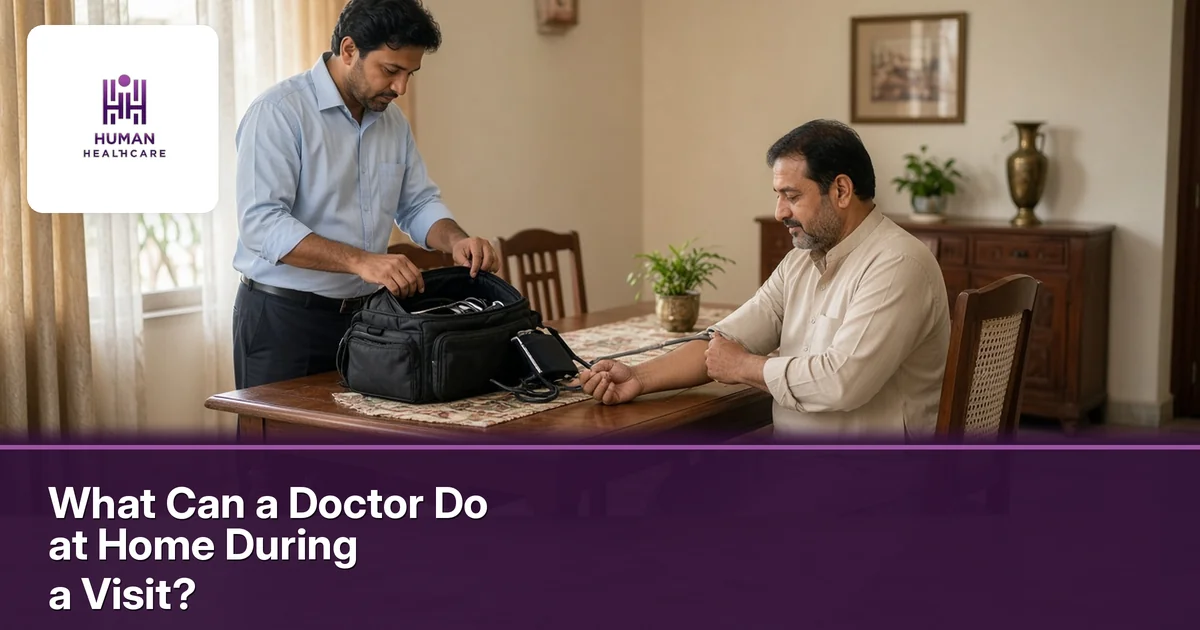
- Checks vital signs: blood pressure, pulse, temperature, breathing rate and oxygen level
- Examines the relevant parts of the body, such as the chest, abdomen, throat or skin
- Checks blood sugar where needed, especially for diabetic patients
This home visit check-up gives the doctor a full picture. At home, they also see the patient's environment. Loose rugs, poor lighting, a hard-to-reach bathroom or an unsuitable diet all affect health, and the doctor can advise on them.
Prescriptions and Medication Review
A licensed doctor can write a prescription at home after assessing the patient. They may start a new medicine, change a dose or stop one that is no longer needed.
A medication review is just as important. Many elderly patients take five or more medicines from different doctors. The home doctor checks:
- Duplicate medicines with different brand names
- Combinations that may interact badly
- Doses that no longer suit the patient's kidney function or weight
- Medicines that were meant to be short-term but never stopped
- Whether the patient takes them correctly
Seeing the actual medicine box at home often reveals problems that a clinic list would miss.
Drips, Injections and IV Therapy
A doctor may recommend IV fluids or injections when clinically appropriate. Common reasons include dehydration from vomiting or loose motions, prescribed antibiotics or vitamin injections.
IV therapy should never start without a medical assessment. Once the doctor decides it is needed, a qualified nurse sets up the drip and monitors the patient. Our injection and IV therapy at home service covers prescribed intramuscular and subcutaneous injections, IV drips, hydration therapy, IV antibiotics and insulin administration, all given by certified nurses.
| Treatment | Who decides | Who gives it |
|---|---|---|
| IV drip for dehydration | Doctor | Qualified nurse, with monitoring |
| Prescribed injection | Doctor | Certified nurse |
| IV antibiotics | Doctor | Certified nurse, over several visits |
| Insulin | Doctor | Nurse, or the trained patient or family |
Wound Checks and Dressings
After surgery, a fall or a pressure sore, wounds need regular checks. A home doctor can look for signs of infection, such as redness, swelling, heat, discharge or fever. They decide whether the wound is healing well and what dressing it needs.
Regular dressing changes can then be done by a nurse at home. See our wound care and dressing service for ongoing support.
Need a doctor's assessment at home? Book an appointment or call 0319-2060174.
Ordering Lab Tests at Home
The doctor can request blood and urine tests during the visit. Common tests include a blood count, sugar and HbA1c, kidney and liver function, cholesterol, thyroid and urine tests. A sample can be collected at home, which saves a trip to the lab.
Results come back to the doctor, who explains them and adjusts the plan. With Human Healthcare, authorised family members can also view lab reports on the Family Health Dashboard.
Referrals to Specialists and Hospitals
A good home doctor knows their limits. When a patient needs more, the doctor refers them. Referrals may be to:
- A specialist, such as a cardiologist, neurologist or endocrinologist
- A hospital for admission, imaging or a procedure
- A physiotherapist for mobility and rehabilitation
- A nursing team for ongoing clinical care at home
The doctor explains why the referral is needed and what to take along. Human Healthcare can help coordinate diagnostics, nursing, physiotherapy and specialist referrals so families do not have to manage everything alone.
What Equipment Does a Home-Visit Doctor Bring?
Every visit includes a basic vitals check. For this, the doctor brings standard tools for a general examination.
Some checks, such as an ECG, need extra equipment. If the patient may need one, ask the coordinator when you book which equipment the doctor will bring. If a test cannot be done at home, the doctor will refer the patient to a centre that can do it.
What Does This Look Like in Real Life?
Here are three common home visits and what the doctor does in each.
An elderly father with fever and weakness. The doctor checks his temperature, oxygen level and chest. They look for signs of dehydration and ask about his fluid intake. They may prescribe medicine, request blood tests with a home sample and arrange a drip through a nurse if he cannot drink enough. If his oxygen is low or he is confused, the doctor advises hospital care.
A mother one week after knee surgery. The doctor checks the wound, her pain level and her calf for swelling. They review her painkillers and blood thinners. They may recommend physiotherapy at home and a nurse for dressings. Any sign of infection or a clot means a quick referral back to the surgeon.
A diabetic patient with high sugar readings. The doctor reviews the sugar diary, checks blood pressure and feet, and looks at the medicine box. They may adjust doses, order an HbA1c test and set a date for the next review.
In each case, the family gets a clear plan and knows what to watch for next.
What Should the Patient and Family Do During the Visit?
The visit works best as a team effort:
- The patient should describe symptoms in their own words and mention every worry, even small ones.
- A family member should share what they have noticed, such as changes in eating, sleep or mood.
- Someone should take notes, or ask the doctor to repeat key instructions.
- Relatives abroad can join by phone to ask their own questions.
- Before the doctor leaves, confirm the medicine plan, the tests ordered and the date of the next visit.
What Cannot Be Done at Home?
Home visits have clear limits. A home doctor cannot provide:
- Emergency care for chest pain, stroke signs, severe breathing difficulty, heavy bleeding or unconsciousness. Go to a hospital emergency department.
- Imaging such as X-rays, ultrasound, CT or MRI.
- Surgery or procedures that need a sterile operating room.
- Intensive monitoring that needs a hospital bed.
How Can You Get the Most From the Visit?
A prepared family gets a better visit. Have medicines, reports and a list of questions ready before the doctor arrives. Our checklist for preparing for a doctor home visit shows exactly what to gather.
For patients with long-term conditions, read about doctor home visits for diabetes, blood pressure and heart patients. Women who prefer a female physician can read about lady doctor home visits in Karachi. For an overview of the whole service, see what a doctor at home service is and how it works.
Frequently Asked Questions
Can a doctor give a drip at home?
Yes, when it is clinically appropriate. The doctor first assesses the patient and decides whether IV fluids or medicines are needed. A qualified nurse then sets up the drip and monitors the patient. IV therapy should never start without a doctor's assessment, and severe dehydration may need hospital care.
Can a home doctor write a prescription?
Yes. A licensed doctor can write a prescription at home after examining the patient. They can also review existing medicines, change doses and stop medicines that are no longer needed. Families receive the prescription and visit notes, and authorised relatives can view them on the Family Health Dashboard.
Can a doctor do an ECG at home?
An ECG needs a portable machine. Ask the care team when you book whether one can be arranged for your visit. If an ECG cannot be done at home, the doctor will refer the patient to a centre. Chest pain is an emergency, so go to hospital straight away.
Know What to Expect From Your Home Doctor
A doctor at home can examine, prescribe, review medicines, arrange drips and dressings, order lab tests and refer onward. Imaging, surgery and emergencies stay with the hospital. Knowing the difference helps your family choose the right care every time.
Book an appointment today. Call 0319-2060174.
1 more tagsShow fewer tags
- Prescription at Home